Head to head
Adilo vs Uscreen
Pick Adilo if you want unlimited streaming with marketing tools built in for a pre-recorded sales video; pick Uscreen if you are building a paid video membership with a catalog, community and branded apps.
You are down to two, but the first decision is not about a feature. It is about the product around the video. Adilo is a video host for businesses and creators. Its strongest case is a pre-recorded sales video that needs unlimited streaming, in-player calls to action, lead capture, retargeting pixels and simple A/B video tests without a developer. Uscreen is a video membership platform. Its strongest case is a catalog people pay to access every month, with subscription billing, community, live streams and branded apps.
That distinction settles most of the comparison. If the video sits inside an existing funnel and its job is to move a viewer to your own cart, Adilo is the closer fit and the cheaper shape. If the video library is the product, and members need their own login, subscription, catalog and app, Uscreen does the work Adilo does not attempt. Neither is a direct substitute for the other once the business model is clear.
This site reviews video software through a direct-response lens. The declared method is to read long-term user reports and each vendor's own documentation and pricing, then verify the prices on the date shown. The tools are not run on live paid campaigns. On that evidence, Adilo wins this two-way comparison for a marketer running a pre-recorded sales video. Its win comes with two cautions: the A/B test is scored on views rather than the sale, and the lifetime-deal and billing history makes month-to-month buying the safer route.
Uscreen wins a different and equally clear reader. A creator building a recurring membership gets native subscriptions, a polished catalog, community, live streaming and branded apps in one system. That breadth is why it costs more. Above Starter, the monthly base is joined by a per-subscriber fee, and the app plan starts at $449 a month on the annual rate. Price the member count and the exact app plan before signing an annual contract.
Both tools leave a gap for the reader whose only product is a paid-traffic video sales letter and whose main question is which ad and video variant produced the sale. Adilo can fire retargeting pixels and compare videos, but it scores the test on views. Uscreen measures members and subscription performance. TrackPlay fits that narrow segment because it posts the cart-verified purchase back onto the play that earned it and decides the split test on sales.
Quick answer
Pick Adilo if you want unlimited streaming, in-video calls to action, lead capture, video A/B tests and retargeting pixels for a pre-recorded sales video; pick Uscreen if you want to sell a recurring video membership with a Netflix-style catalog, subscription billing, community and branded mobile and TV apps.
One more option belongs on this page for a specific reader. Adilo scores its video tests on views, while Uscreen measures a membership business. If your whole business is a paid-traffic sales letter and you need the split test decided on the cart-verified sale, TrackPlay is the newer specialist built to connect each play to the purchase and post that conversion back to the ad platforms.
- Adilo. A well-liked video host with unlimited streaming and marketing tools built in. The free plan and paid Unlimited plan both avoid bandwidth charges, while the player carries in-video calls to action, buy buttons, lead capture, Facebook and Google retargeting pixels, A/B video tests, chapters and captions. The limits are important: its tests score views rather than sales, its paid price appears only after you choose storage in the app, and the company has a record of cancelled AppSumo lifetime deals and post-cancellation billing complaints.
- Uscreen. A video membership platform for creators selling recurring access to a catalog. It combines subscription and one-off billing, a Netflix-style library, native live streaming, community and branded mobile and TV apps. Reviewers praise the apps and onboarding. The cost rises fast: Starter is $49 a month but caps at 100 subscribers, higher tiers add $0.99 to $1.99 per subscriber, and the branded mobile apps begin at $449 a month on the annual rate. Reviewers also report rigid annual contracts.
- TrackPlay. Best when the video is a paid-traffic sales letter and the decision has to rest on the cart-verified sale. It combines a conversion-focused player, per-second buyer-versus-non-buyer retention, server-side ad-platform attribution and same-embed split tests from $29 a month, with a free tier.
Adilo vs Uscreen at a glance
Prices and plan features checked on the vendors' own pages on 28 September 2026. TrackPlay is the direct-response specialist we line these two up against, so it wins the conversion rows and sits out the general-hosting ones.
| Feature | Adilo | Uscreen | TrackPlay |
|---|---|---|---|
| What it is | Unlimited-streaming video host with marketing tools | Video membership and subscription platform | Paid-traffic VSL player and attribution platform |
| Built for | Pre-recorded sales and marketing video | Recurring video memberships and catalogs | Tying each sales-video play to the verified purchase |
| Starting price | Free plan; paid price set by storage and shown in-app | $49/mo Starter, paid monthly | $29/mo, billed by plays |
| Free tier | Yes, with unlimited streaming | No; 14-day trial with no card | Yes, 1,000 plays/mo, watermarked, no card |
| How usage is billed | Storage, not bandwidth or views | Base plan plus subscriber fees above Starter | Plays, with every feature on every paid plan |
| Video experience | Embeddable player, chapters, channels and landing pages | Netflix-style catalog, member logins and apps | Sound-first autoplay, timed CTAs and watch gates |
| Calls to action | In-video buttons and lead forms | Membership offers and checkout around the catalog | Timed CTA cards and lead capture over the video |
| A/B testing | Video tests scored on views | No sales-video split test | Same-embed tests decided on cart-verified sales |
| Ad tracking | Facebook and Google retargeting pixels | Marketing analytics, not sales-video attribution | Server-side to Meta, TikTok and GA4 |
| Retention analytics | Viewer heatmaps | Member, content and churn analytics | Per second, split into buyers and non-buyers |
| Revenue attribution | No | Membership revenue, not play-to-sale attribution | Revenue per play with cart postbacks |
| Monetization | Use your own cart through buy buttons | Subscriptions, one-off sales and free trials | Use your own cart; the sale is posted back to the play |
| Mobile and TV apps | No | Mobile apps from App Essentials; TV apps on Custom | No |
| Community | No | Channels, direct messages and challenges on Custom | No |
| Content protection | Multi-DRM and dynamic watermarking as paid add-ons | Member access controls and app delivery | Domain-locked hosting and access controls |
| Independent proof | Strong day-to-day reviews, serious lifetime-deal complaints | 4.7/5 on G2, plus contract and payout complaints | Very new, thin outside proof, invite-only |
| Best for | A marketer embedding one pre-recorded sales video | A creator selling access to a growing video library | A paid-traffic VSL measured on the verified sale |
Strengths and trade-offs
Adilo gives a marketer a finished host for one sales video and leaves the cart outside the player. Uscreen gives a creator the business around a growing video catalog and charges for that membership machinery. The right answer comes from what you are selling, not which feature list is longer.
Adilo: what works, what to watch
What works
- Unlimited streaming and bandwidth on every plan, including the free one, so a video that suddenly gets traffic does not trigger the per-GB overage bill that meters a Bunny, Vimeo or SproutVideo. You pay for storage, not views
- Genuinely well-liked by day-to-day users: roughly 4.8 out of 5 on Capterra across hundreds of reviews and 4.6 across 720 on G2, with an easy on-brand player, simple course embedding and fast live-chat support the repeated praise
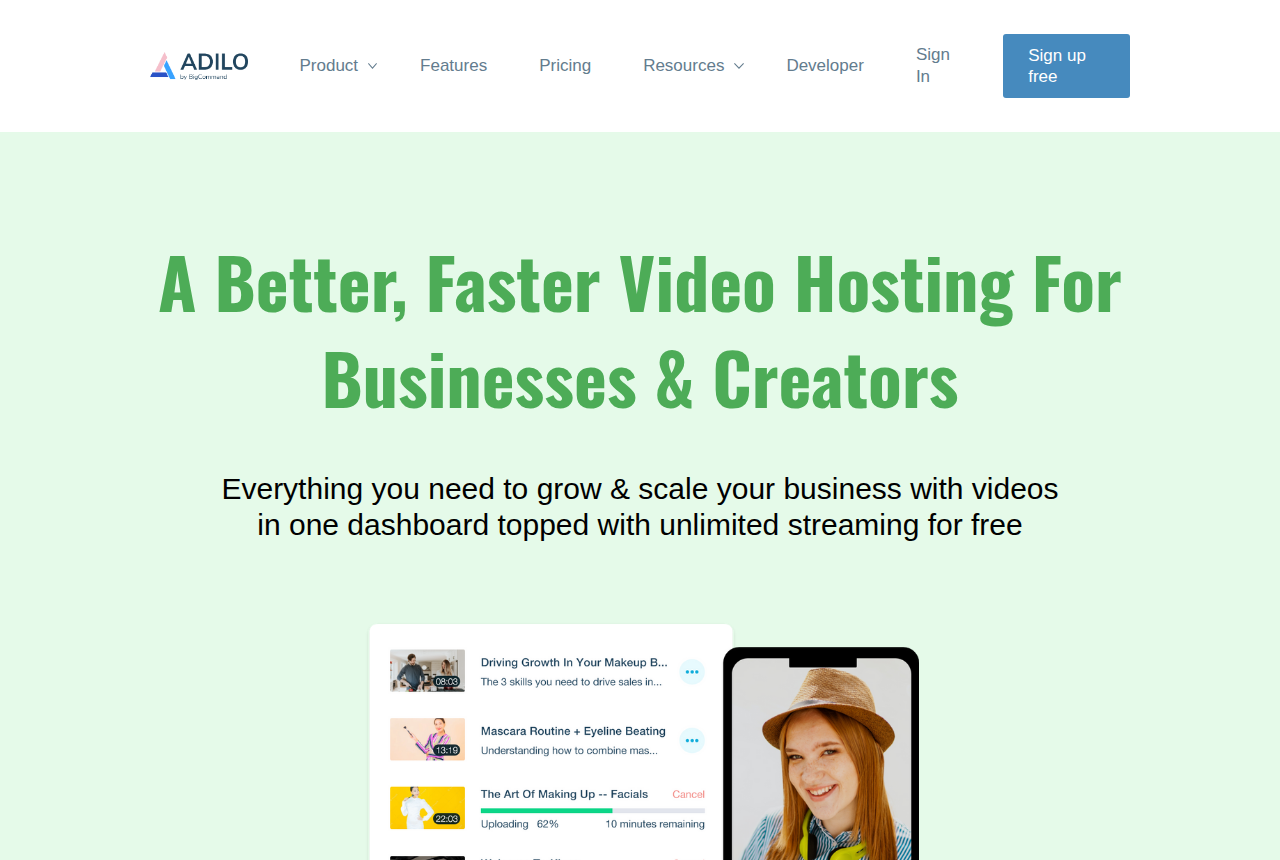
- Marketing hooks most cheap hosts skip, in one dashboard: in-video CTAs and buy buttons, lead capture, Facebook and Google retargeting pixels, A/B video split testing, chapters, and AI subtitles with translation into 31 languages
- It can replace several tools at once: a built-in screen and camera recorder, branded video channels for your library, heatmap analytics, and one-click import from Vimeo, Wistia and Dropbox
- Real content protection is available for course sellers worried about piracy: multi-DRM encryption and dynamic per-viewer watermarking, plus password, domain and region locking (sold as a paid add-on)
What to watch
- The dominant complaint is trust, not playback: Adilo sold thousands of AppSumo lifetime deals it later said it could not honour, restricting those accounts and pushing them onto paid subscriptions, and Trustpilot carries reports of charges after cancellation. Buy month to month, cancel in writing, and keep the confirmation
- It does not score a split test on the sale or attribute revenue: its A/B testing and heatmaps measure views and engagement, not which traffic actually bought, so a paid-traffic VSL still cannot prove ROI from inside Adilo
- The paid Unlimited plan's price is not published: the pricing page shows a free plan and one paid plan priced by how much storage you pick, with the figure only shown in-app at checkout, so you cannot compare it cleanly before you sign up
- DRM and simulated livestreaming are optional paid add-ons on top of the plan, not included, so the real cost for a course seller who needs encryption is higher than the base sticker
- It is a marketing-shaped host, not a dedicated VSL player: there is no sound-first smart autoplay or sales-scored optimisation built for direct response, so a serious paid-traffic funnel will still reach for a purpose-built player
Uscreen: what works, what to watch
What works
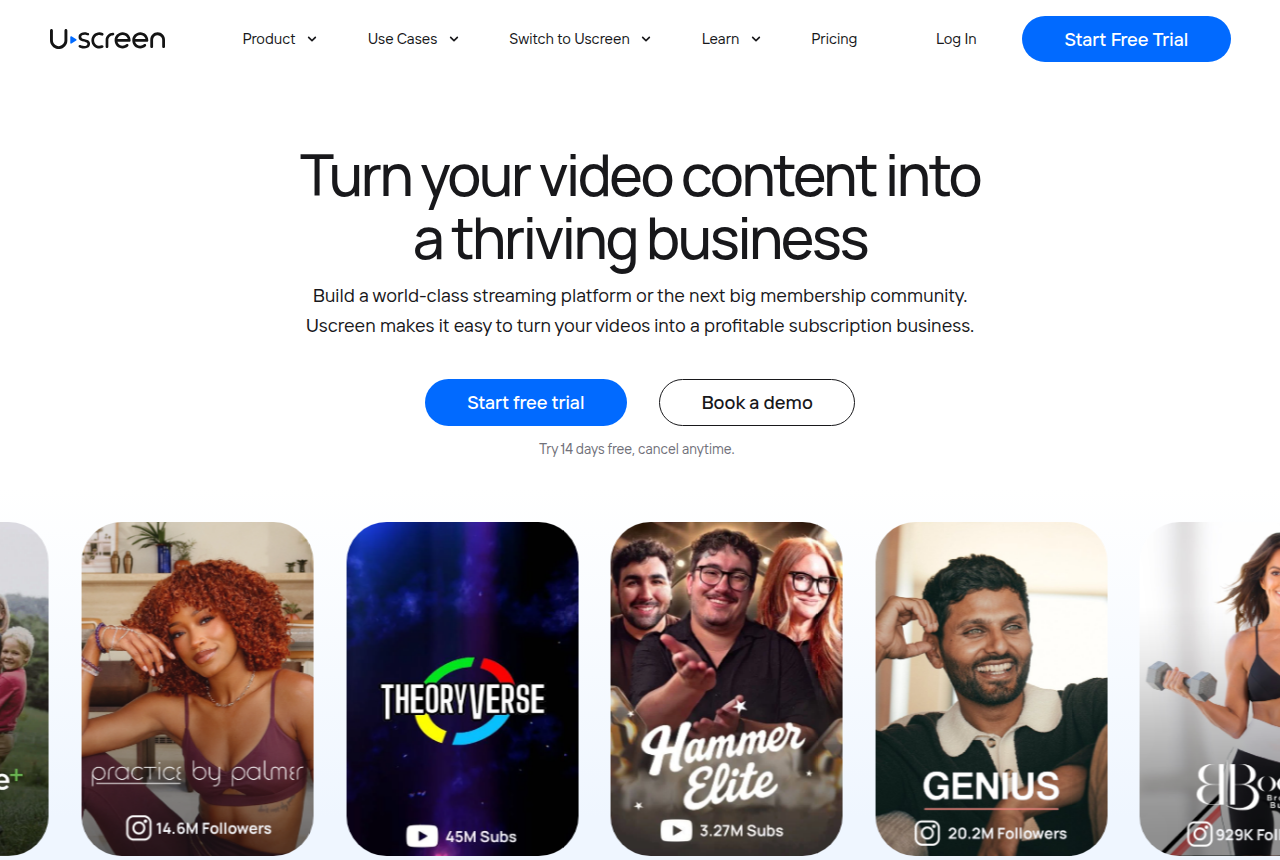
- Purpose-built for subscription memberships: a Netflix-style catalog, native live streaming and a community space in one platform, so members watch, chat and pay without you stitching three tools together
- Branded mobile and TV apps are the standout feature. Uscreen builds iOS, Android and TV apps for you with no code, and reviewers say the app makes a membership feel legitimate and lifts the share of viewing that happens in-app
- Real monetization built in: subscriptions, one-off sales and free trials, plus marketing automations and analytics, so you charge members directly instead of bolting on a separate cart
- Hands-on onboarding and free migration. A dedicated success manager walks you through setup, and reviewers repeatedly credit the team with making the launch of a site and app easy
- A 14-day free trial with no card, and a Starter plan at $49/mo, so you can test the membership model before committing real money
What to watch
- It is a membership platform, not a direct-response VSL player: there is no sound-first smart autoplay, no split test scored on the sale and no revenue attribution, so a paid-traffic sales letter still cannot prove which traffic actually bought from inside Uscreen
- The per-subscriber fee is the loudest complaint. Above Starter you pay $0.99 to $1.99 per subscriber on top of the monthly base, so a growing membership pays far more than the headline price, and reviewers describe the total take as high once fees stack up
- Annual contracts are rigid: Trustpilot reviewers report no mid-term downgrade or cancellation and being billed through the full term, so treat the annual commitment as firm and start on the monthly Starter plan to test
- Support and payouts can go quiet at the worst time. Reviewers report delayed payouts after cancelling and difficulty reaching a person to resolve a billing problem, so keep your own records and cancel in writing
- The entry price is not the price to run apps. Starter caps at 100 subscribers and mobile apps only begin on App Essentials at $449/mo, and the dashboard and marketing tools draw usability complaints, so budget and pilot for the plan you will actually need
TrackPlay: the paid-traffic VSL pick
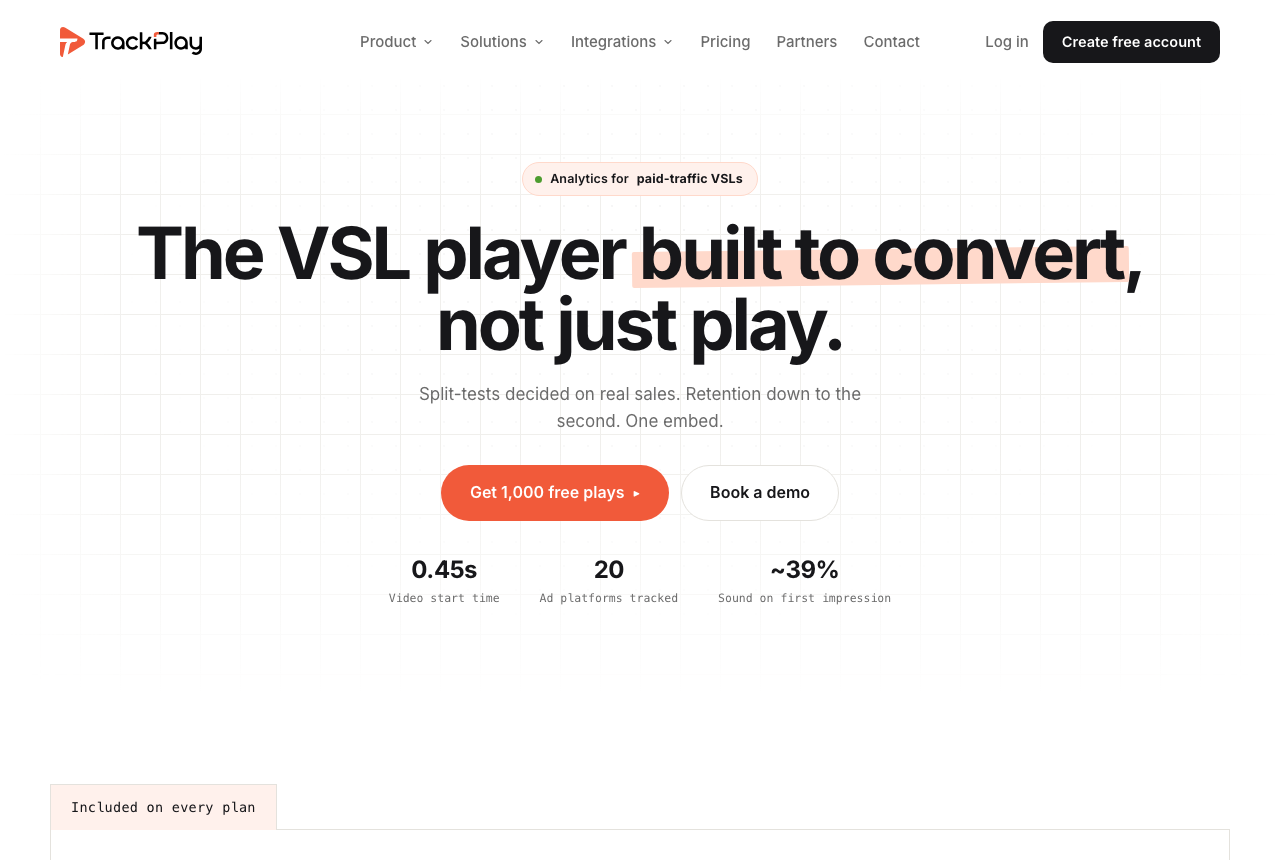
Adilo and Uscreen stop short of the same measurement in different ways. Adilo hosts a sales video and adds calls to action, lead capture, retargeting pixels and viewer heatmaps, but its A/B test is scored on views. Uscreen runs the membership around a catalog, so its analytics cover subscribers, content and churn rather than the sale produced by a specific second of a sales letter. If the video sits on paid traffic and the decision must rest on money, TrackPlay belongs in this segment. It is a VSL player and analytics platform for paid-traffic funnels that ties every play to the sale and posts the cart-verified conversion back to the ad platforms.
The player is built to hold attention with sound-first autoplay, timed calls to action and watch gates. Its analytics draw retention for every second, split buyers from non-buyers, and report hook rate, hold rate and revenue per play. The cart posts the verified sale back onto the play that earned it, and TrackPlay sends that conversion server-side to Meta, TikTok and GA4. Variants run under one embed, and the winner is decided on the verified sale with a z-test, p-value and confidence interval, so campaign links do not change when a new variant enters the test.
What works
- A paid-traffic VSL player with sound-first autoplay, timed calls to action and watch gates, not just an analytics add-on
- Split tests are decided on the cart-verified sale with a z-test, p-value and confidence interval, and variants run under one embed
- Server-side conversion reporting to Meta, TikTok and GA4, with cart postbacks tying the sale to the play that earned it
- Per-second retention split into buyers and non-buyers, with hook rate, hold rate and revenue per play
- Every feature is on every paid plan; paid plans start at $29 a month, with a no-card free plan and a 14-day trial
What to watch
- Narrow by design: it is not a general host, B2B content library or subscription platform, and has none of Uscreen's billing, branded apps and community, so it is a poor fit for a membership or content-marketing library
- Very new, with thin outside proof and invite-only signup, so buyers cannot lean on a large independent review base before sending paid traffic
Where TrackPlay is not the answer
It is narrow by design. TrackPlay is built for paid-traffic VSL conversion, not general video hosting, a B2B content library or a subscription membership, so it has none of Uscreen's subscription billing, branded mobile and TV apps or community, and it is a poor fit when the video's job is content marketing rather than a direct-response sale. That limit does not touch its player, retention analysis or server-side attribution for the sales-video job it does serve. It is also very new, with thin independent validation: testimonials are on its own site, there is little third-party review or Reddit footprint, and signup is currently invite-only. That is what you would expect of a platform this recent, but it still means buyers should pilot one funnel and reconcile the results against their own cart before committing paid traffic.
Visit TrackPlay for the current plans and the free tier.
Pricing, tier by tier
Adilo has a free forever plan with no card, limited storage and unlimited streaming. The paid Unlimited plan also removes bandwidth and view charges, but the vendor does not publish one flat sticker price. You choose the storage allowance and see the price inside the app at checkout, with annual billing advertised at 40 percent off. That makes the traffic bill predictable but the pre-signup comparison less transparent. Multi-DRM, dynamic watermarking and simulated livestreaming are paid add-ons rather than base-plan inclusions.
Uscreen starts at $49 a month on Starter, paid monthly. It allows up to 100 subscribers, includes 20 hours of storage and charges 10 percent on one-off sales. Growth is $149 a month on the annual rate or $199 monthly, with unlimited subscribers, 100 hours of storage and a $1.99 fee for each subscriber. That per-subscriber charge matters more than the base once the membership grows.
The branded-app tier is the real price line for many Uscreen buyers. App Essentials costs $449 a month on the annual rate or $499 monthly, adds two mobile apps, migration support and three admin seats, and still charges $0.99 per subscriber. TV apps, community and API access sit on a custom plan. Extra storage is $99 per 100 hours, and live streaming beyond the included hour costs $15 per hour.
The two pricing models serve different businesses. Adilo asks how much video you store and does not meter the audience. Uscreen asks how much membership infrastructure you need and, above Starter, how many subscribers you serve. For one sales video inside an existing funnel, the membership fee, app plan and subscriber charge are wasted spend. For a paid catalog, Adilo's cheaper hosting still leaves you to assemble billing, accounts, community and apps elsewhere.
There is a contract caution on both sides, but it is not the same. Adilo's risk is its history with AppSumo lifetime deals and reports of charges after cancellation. Buy month to month, cancel in writing and keep the confirmation. Uscreen's risk is commitment: Trustpilot reviewers report annual terms they could not downgrade or cancel mid-contract, plus delayed payouts after leaving. Start with the monthly Starter plan and prove the membership before moving to an annual tier.
TrackPlay uses a third model for the paid-traffic VSL segment. It bills on plays rather than storage, bandwidth or subscribers. Every feature is included on each paid plan, paid plans start at $29 a month, and the no-card free plan includes 1,000 plays a month with a watermark. There is also a 14-day trial of the paid features. That price buys the attribution and sales-scored testing neither Adilo nor Uscreen provides.
The verdict
Between these two, Adilo wins for this site's core reader: the marketer who already has a funnel and needs to host a pre-recorded sales video without bandwidth charges. It provides unlimited streaming on every plan, including the free plan, and puts in-video calls to action, buy buttons, lead capture, Facebook and Google retargeting pixels, video A/B tests, chapters and captions in one dashboard. Uscreen makes little economic sense for that job because its price buys subscriber accounts, a catalog, community and apps the funnel does not need.
Keep two honest limits attached to the Adilo pick. First, its tests and heatmaps measure views and engagement rather than the cart-verified sale, so they cannot prove which variant or paid click produced revenue. Second, the billing history is the real risk. The company cancelled AppSumo lifetime deals that buyers expected it to honour, and Trustpilot includes reports of charges after cancellation. The software draws strong day-to-day reviews, but the safe buying route is month to month, with cancellation in writing and the confirmation saved.
Uscreen wins when the video library is the product. A creator selling recurring access gets subscription billing, free trials and one-off sales, a Netflix-style catalog, native live streams, community and branded apps from one vendor. Reviewers repeatedly single out the mobile app and onboarding as the reasons to choose it. The trade is cost and commitment: the app tier starts at $449 a month on the annual rate, higher plans add a per-subscriber fee, and reviewers describe annual contracts as firm. Model the member count and start monthly before committing for a year.
There is a third decision for the paid-traffic VSL buyer who needs proof at the sale. TrackPlay combines the conversion-focused player, per-second buyer-versus-non-buyer retention, cart postbacks and server-side reporting that neither tool supplies, and decides same-embed split tests on the verified purchase. It remains the narrower and newer choice, with thin outside proof and no membership features. Pilot it on one funnel. For general sales-video hosting choose Adilo; for a recurring video membership choose Uscreen.
Our pick
Adilo
Adilo is the pick between these two for a marketer who already has a funnel and needs unlimited streaming plus in-video calls to action, lead capture, A/B video tests and retargeting pixels in one dashboard. Its tests score views rather than sales, and its lifetime-deal and cancellation history makes month-to-month buying the safer route. If the video catalog is the product and members need subscriptions, community and branded apps, Uscreen is the better fit.
Frequently asked questions
Is Adilo or Uscreen better?
Which is cheaper, Adilo or Uscreen?
Can Uscreen replace Adilo for a video sales letter?
Can Adilo build a Netflix-style membership?
What are the main contract and billing risks?
What if I need the split test decided on actual sales?
Sources
Other sources
12 discussions and reviews read for this page. Quotes are excerpts; open a link to read the original in context.
- [] Adilo home (vendor)
- [] Adilo pricing (vendor)
- [] Adilo features (vendor)
- [] Uscreen home (vendor)
- [] Uscreen pricing (vendor)
- [] Uscreen app builder (vendor)
- [] TrackPlay home (vendor)
- [] Adilo reviews on Capterra
- [] Adilo reviews on Trustpilot
- [] Adilo lifetime-deal question on AppSumo
- [] Uscreen reviews on G2
- [] Uscreen reviews on Trustpilot
Related reading
- Our full Adilo review, the unlimited-streaming host judged against the sale
- Our full Uscreen review, the membership platform judged against the sale
- Adilo alternatives, ranked by the job
- Uscreen alternatives, ranked by the job
- TrackPlay vs Adilo: sales-scored attribution or unlimited streaming with marketing tools
- VSLStats vs Uscreen: a paid-traffic tracker or a subscription membership platform
- The best VSL players and conversion video software
- All head-to-head comparisons