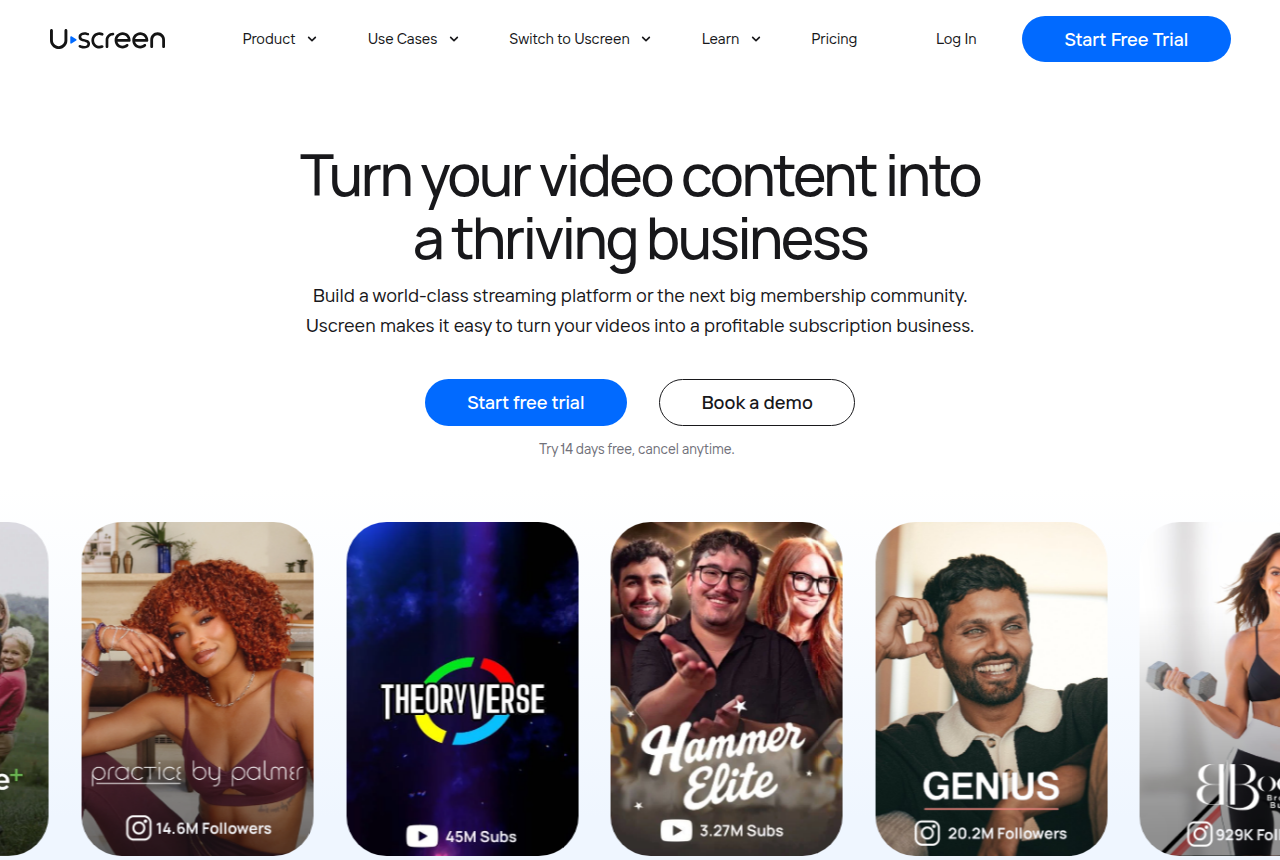
You have probably seen Uscreen recommended as the way to turn a following into a paying membership, maybe by a fitness instructor or a creator with their own app, and the question is the honest one: is it real, and will you regret buying it? The short version is that Uscreen is real and well-established. It says it has helped more than 4,000 creators launch subscription businesses, it rates 4.7 out of 5 on G2, and it runs full memberships with branded apps for real brands. The risk is not that it is a scam. It is buying it for a job it does not do, and getting caught by the way it charges.
What Uscreen is is a complete membership platform. It hosts your video in a Netflix-style catalog, wraps a community space and native live streaming around it, and, on its higher plans, builds you branded iOS, Android and TV apps with no code so members watch on the same devices they use for the big streaming services. Around that sit subscriptions, one-off sales, free trials, marketing automations and analytics, plus hands-on onboarding and a free migration team. For a creator whose plan is to charge a recurring fee for a library of content and keep an audience engaged month after month, that is a genuinely complete platform, and the apps are the part reviewers single out.
Where a direct-response marketer has to be careful is two things: the job, and the money. On the job, Uscreen is built to run a subscription membership, not to convert cold paid traffic on a sales letter. There is no sound-first smart autoplay, no split test scored on the sale and no revenue attribution, so a media-buyer running a VSL still cannot prove which ad actually produced the purchase from inside Uscreen. On the money, the loudest theme in the reviews is the per-subscriber fee, which stacks on top of a monthly base that already runs to hundreds of dollars once you want the apps, plus annual contracts buyers describe as rigid. This review is about telling a complete membership platform apart from a conversion tool, and about modelling the real bill before the trust question becomes a regret.