Head to head
JW Player vs Brightcove
One is the web player publishers still buy for ad yield, now branded JWX. The other is a video cloud that ships television apps and subscription paywalls. The pick turns on whether the audience is a browser with ads or a living-room app with a subscription.
You are down to two names from an enterprise shortlist, and a search for brightcove vs jw player or jwplayer vs brightcove is the same pair. JW Player now operates as JWX at jwx.com. The viewer-experience pricing page still labels the web player formerly known as the JW Player, so an old jwplayer.com bookmark is the wrong place to read a quote.
They overlap on a brochure and split on the job. JWX sells composable hubs for streaming delivery, publishing through Content Hub, and advertising through QuantumPath, plus modular media management, video on demand, live delivery and monetization. Brightcove describes an end-to-end cloud: host and stream, a library, analytics, monetization, interactivity, Gallery, OTT, live, an AI Suite, a player and developer APIs. Both hide the dollar price behind a sales conversation.
This site reads vendor pages and long-term user reports, then judges a tool by whether a play can be tied to a sale. Neither of these two is a direct-response sales-letter player. For an ad-led publisher on the web, JW Player is the closer fit. For apps on the television and a subscription product, Brightcove is. A funnel that has to prove which edit sold is a third decision, and it is below.
Quick answer
Pick JW Player if you want an ad-led web player for a publisher, with client-side ads and a quote based on plays or a revenue share; pick Brightcove if you need native apps on Roku, Fire TV, Apple TV and Android TV, subscription paywalls, and server-side ad insertion.
If the video is a sales letter bought with ads, and the winner has to be the version that actually sold, keep reading past these two. TrackPlay is the specialist on this page for that job, and Vidalytics is the established player buyers usually weigh it against.
- JW Player. The publisher web player of the pair, now sold as JWX. The pricing page still carries the old product name. Express prints a play cap and a share-of-revenue option, and the dollar amount is a sales quote. Strongest when the job is ad yield on the web. The matrices do not name Brightcove's television apps, and this player does not settle a test on a purchase.
- Brightcove. The television-app and subscription cloud of the pair. Native apps cover phones, tablets and the living-room platforms, with server-side ads and a paywall. Brightcove cites 124 million average streaming sessions a day. There is no public dollar price. It does not settle a test on a purchase either.
- TrackPlay. The specialist when a test has to be decided on purchases and the sale posted back to the ad platforms. Plans from $29 a month, billed by plays. Narrow on purpose, and very new.
JW Player vs Brightcove at a glance
Prices and plan features checked on the vendors' own pages on 12 October 2026. TrackPlay is the direct-response specialist we line these two up against, so it wins the conversion rows and sits out the general-hosting ones.
| Feature | JW Player | Brightcove | TrackPlay |
|---|---|---|---|
| What it is | Publisher web player and monetization hubs, branded JWX | End-to-end video cloud with OTT apps | VSL player and attribution platform for paid traffic |
| Built for | Ad yield on web and mobile | Television apps and subscription video | Tying each play to a cart-verified sale |
| Public price | No dollar list. Sales quote | No dollar list. Sales quote or demo | From $29/mo, billed by plays |
| How you are metered | Plays (Express cap 4.8M) or revenue share; hours and GB on the back end | Not published. Studio packs, no dollar figures | Plays, not bandwidth or seats |
| Web player | HTML5 player, captions, client-side ads | Player included in the cloud | One embed, sound-first autoplay, timed CTAs |
| Ad stack | Client-side ads, player bidding on higher tiers, one auction for direct and programmatic | Server-side ad insertion, plus AVOD, SVOD, TVOD and hybrid | No publisher ad server. Sale posted to Meta, TikTok and GA4 |
| OTT apps | Not named on the matrices we read | iOS, Android, Apple TV, Android TV, Roku, Fire TV, tablets | No television apps |
| Live | Live delivery; Broadcasting tier adds live ingest caps | Live streaming is part of the platform | On-demand sales letters |
| Subscription paywall | Not on the player matrices we read | Paywalls, flexible authentication, region pricing | No paywall. Your cart records the sale |
| Sales-scored tests | No | No | Yes, on the cart-verified sale, under one embed |
| Cart attribution | No | No | Yes, server-to-server from seven carts |
| Scale claim | 5B plays, 18B ad impressions, 10B minutes a month | 124M sessions a day, 5.9B player requests a month | Very new, thin outside proof |
| Best for | Publishers selling ads on the web player | OTT apps and subscription products | Paid-traffic sales letters measured on purchases |
Strengths and trade-offs
JW Player is strongest when a publisher wants ad demand on a familiar web player and a quote that follows plays or revenue. Brightcove is strongest when the product is an app on the television and a subscription. Here is what each does well, and the bill and the admin complaints that travel with them.
JW Player: what works, what to watch
What works
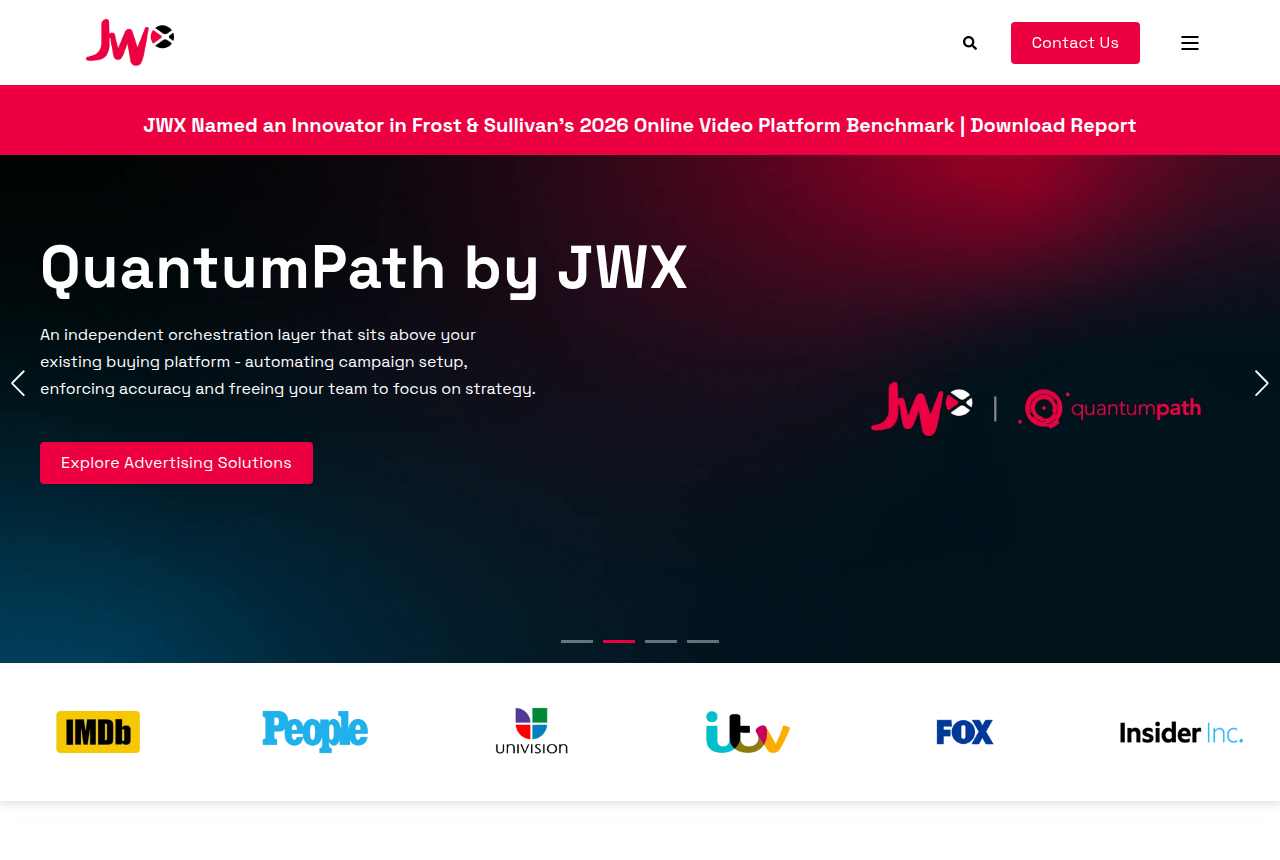
- Composable hubs for streaming delivery, publishing (Content Hub) and advertising (QuantumPath), so a publisher can add modules instead of buying a full television-app suite
- The HTML5 web player, still labeled formerly known as the JW Player, includes captions and client-side ads, with player bidding on higher tiers
- JWX states 5 billion monthly video plays, 18 billion monthly ad impressions and 10 billion monthly minutes viewed
- Express Publishing meters the web player by video plays, with a public cap of 4.8 million across web and mobile, or by a revenue share
- An ad-ops team on Reddit reports leaving Brightcove for JW Player on an annual plan because it cost less and priced to what they used
What to watch
- No dollar list price on jwx.com. The matrices show the meter and send the amount to a sales conversation
- A 2025 Capterra review titled Highly overcharging and lack of customization calls the product outdated, overcharged and not developer friendly
- An older r/adops thread about JW Player price increases includes a blunt line that the player is very expensive. Read it as a renewal complaint, and take the dollar amount from the sales quote
- G2 shows 3.7 out of 5 from 13 reviews, a thin outside record for a player this old
- No split test decided on a cart-verified sale, and no postback that ties a purchase to the play
Brightcove: what works, what to watch
What works
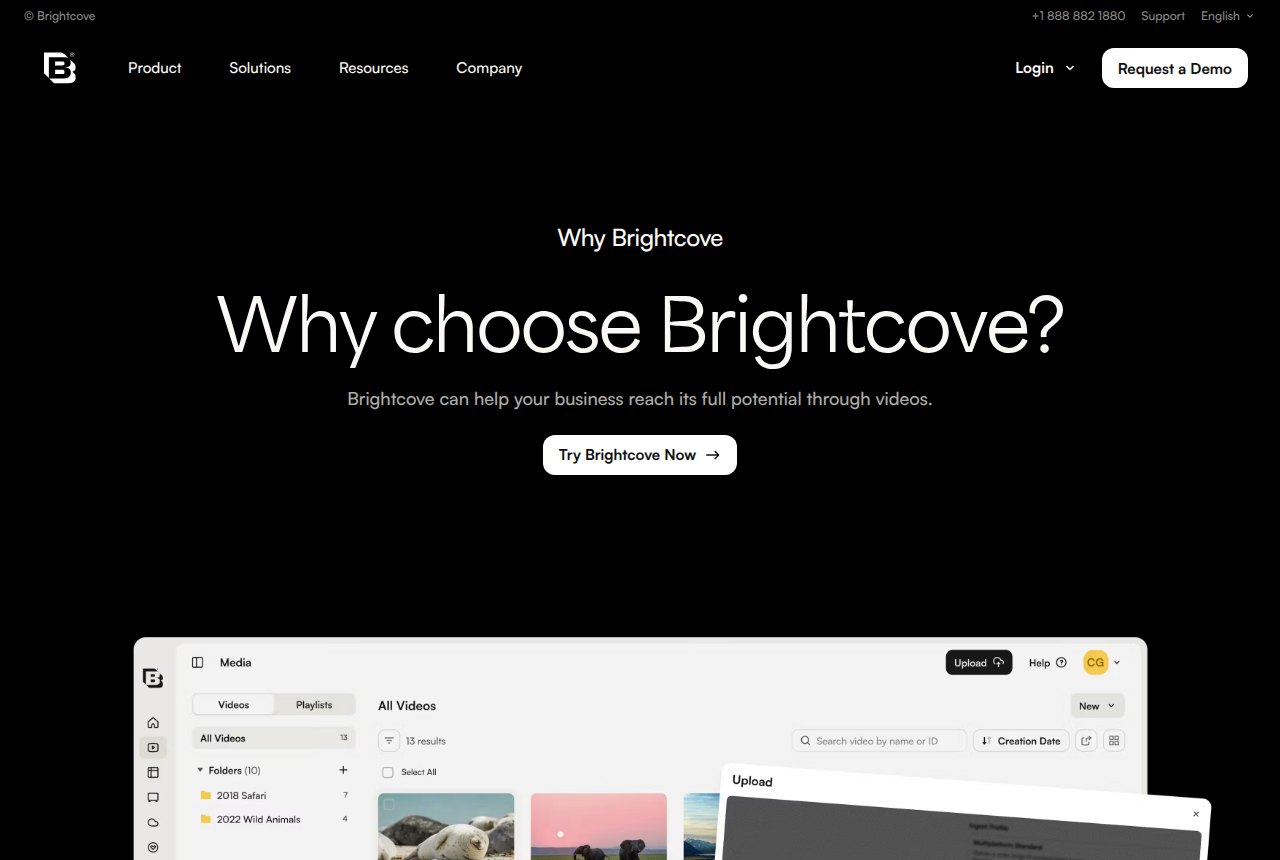
- Enterprise video cloud spanning hosting, streaming, a managed library, analytics, live video, Gallery portals, OTT apps, a player and developer APIs
- OTT delivery across iOS, Android, Apple TV, Android TV, Roku, Amazon Fire TV and tablets
- Gallery adds branded portals, lead forms, calls to action, SEO, Salesforce and HubSpot integrations without requiring a custom build
- Published Studio package matrices separate Marketing, Communications and Media buyers
- Brightcove cites 124 million average streaming sessions a day, 5.9 billion average player requests a month and two Technology and Engineering Emmy Awards
What to watch
- Brightcove publishes no prices. The buying path runs through Contact Sales or Request Demo
- A critical G2 review complains about poor interfaces, weak reporting and admin tools that restrict what teams can do
- An older ad-ops commenter says the team paid for unused features at roughly three times the replacement cost
- The platform covers far more than a self-serve marketing library or a developer-only delivery API, so a small team can pay for modules it never touches
- The vendor pages reviewed do not describe a split test decided on a cart-verified sale or a purchase postback for paid-traffic VSLs
TrackPlay: the paid-traffic VSL pick
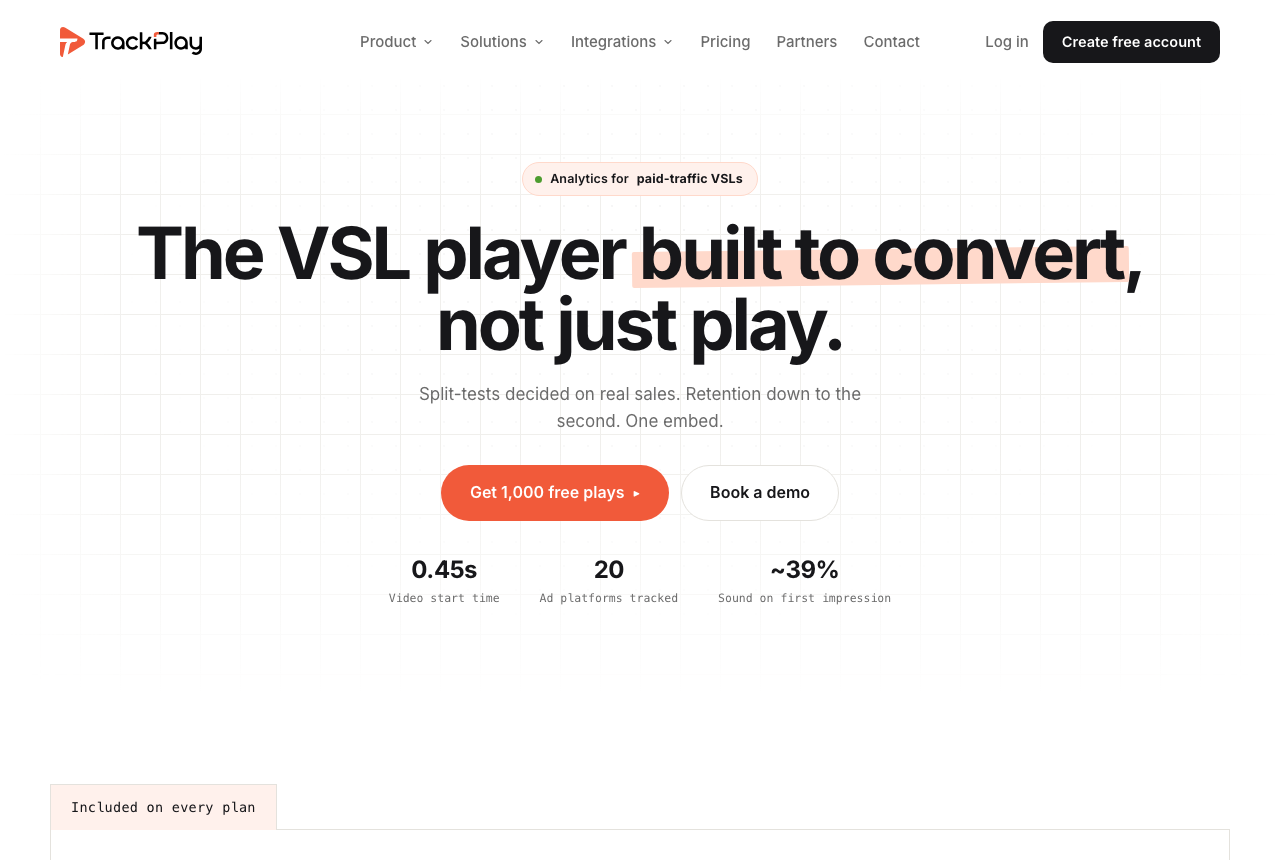
TrackPlay is a VSL player and analytics platform for paid-traffic funnels. It hosts the video behind one embed that drops into a funnel, holds attention with sound-first autoplay, timed call-to-action cards and watch gates, and draws retention per second, split into buyers and non-buyers, with hook rate, hold rate and revenue per play.
JW Player measures ad demand and Brightcove measures streaming sessions. Neither posts a purchase back onto the play. TrackPlay's cart postbacks do that from seven direct-response carts, ClickBank, ClickFunnels, Kiwify, BuyGoods, Digistore24, WarriorPlus and JVZoo, server to server. It then fires the conversion to Meta, TikTok and GA4 on the watch-time milestone you choose, and it dedupes browser and server events. Split tests stay under one embed, so ad links do not reset, and the winner is chosen with a z-test, a p-value and a confidence interval. Every feature ships on every paid plan. Paid plans start at $29 a month. The free allowance is 1,000 watermarked plays a month, and a 14-day trial opens the paid features.
What works
- Split tests are decided on the cart-verified sale with a z-test, a p-value and a confidence interval, and the variants stay under one embed so campaign learning does not reset
- Server-side events to Meta, TikTok and GA4 fire on the watch-time milestone you choose and dedupe browser and server events
- Cart postbacks tie the sale to the play from seven direct-response carts, including ClickBank, ClickFunnels and Digistore24
- Retention is drawn per second and split into buyers and non-buyers, with hook rate, hold rate and revenue per play
- Every feature is on every paid plan, billing is by plays, and paid plans start at $29 a month. A 14-day trial opens those features, and the free allowance is 1,000 watermarked plays a month
What to watch
- Narrow by design. Channels, SEO pages and webinars of the kind Wistia ships, and the television apps and subscription paywall Brightcove ships, sit outside this product. A content library or an OTT channel belongs on those tools. A recorded sales video still gets the player, the retention curves and the cart postbacks.
- Very new, with thin outside proof: testimonials are on its own site, there is little independent review or Reddit footprint yet, and signup is currently invite-only, which is what you would expect of a platform this recent. Pilot one funnel before you move a proven offer.
Where TrackPlay is not the answer
It is narrow by design. TrackPlay is built for paid-traffic VSL conversion, so it is not a general video host or a B2B content library. It has none of the channels, SEO pages or webinar tooling of a Wistia, and it is a poor fit if the video's job is content marketing rather than a direct-response sale. The same limit shows up against this pair: no publisher ad auction like JW Player's Content Hub, and no living-room apps or subscription paywall like Brightcove. The player, the retention curves and the cart postbacks still apply to a recorded sales video on paid traffic. Signup is invite-only and outside reviews are thin, which fits a very new product. That is not a reason to run an enterprise OTT channel on it.
Visit TrackPlay for the current plans and the free tier.
Pricing, tier by tier
JWX publishes the meter and withholds the dollars. On the viewer-experience matrix, Express Publishing prices the web player by video plays, with a cap of 4.8 million across web and mobile, or by a revenue share. That tier includes the HTML5 player, captions and client-side advertising. Player bidding is listed as optional on higher tiers. The page says Contact Sales for the amount.
The management and delivery matrix is a second bill. Express Publishing meters hours managed, with a public maximum of 1,600 hours, and gigabytes delivered, and it can also take an ad revenue share. The Broadcasting tier is the one that adds live ingest caps. Studio DRM is a license on the higher tiers. The base matrix covers hours, gigabytes and the share option. Again, the dollar figure is a sales conversation.
Brightcove does not publish a price list. The actions on the site are a sales form and a demo request. The packs a buyer is quoting are the studio lines: Media, Marketing, Communications and Beacon, the last of those aimed at app experiences. There is no Express-style play cap to put in a spreadsheet until a salesperson sends one.
Put the two quotes next to each other only after both sales calls, because a public comparison of monthly fees would be invented. What the pages do show is the shape of the bill. JWX will talk in plays, hours, gigabytes or a share of ad revenue. Brightcove will talk in a studio package. Buyers who later felt they had paid for capacity they did not use show up in the trade-offs above, on both sides.
TrackPlay meters a third way, and only for a sales letter. It bills by plays rather than by seats or bandwidth, every feature ships on every paid plan, and paid plans start at $29 a month. The free allowance is 1,000 watermarked plays a month, and a 14-day trial opens the paid features. Television apps stay on Brightcove's quote.
The verdict
Between these two, JW Player wins for a publisher whose video lives on the web and makes money from ads. You get the HTML5 player JWX still labels as the former JW Player, client-side ads, player bidding on the higher tiers, and a public matrix that caps Express plays at 4.8 million or offers a revenue share. Brightcove is a strong cloud, and a publisher who only needed that web player would be quoting television apps, Beacon and subscription paywalls they may never open.
Brightcove wins the living-room reader outright. If the product is an app on Roku, Fire TV, Apple TV or Android TV, with a subscription, a freemium mix or server-side ads that are meant to get past blockers, that is the page Brightcove actually publishes. JWX's matrices meter a web and mobile player and a broadcasting tier with live ingest caps. They do not name that device list. G2's compare page, read in October 2026, lists Brightcove at 4.0 out of 5 from 53 reviews and JW Player at 3.7 out of 5 from 13, and both snippets show contact-only entry pricing.
The tie-breaker is the job. If the audience is a browser and the money is advertising, take JW Player and get the play cap and the revenue-share option in writing. If the audience is a television app and the money is a subscription, take Brightcove and get the studio pack in writing. If the video is a sales letter and the test has to be settled on purchases, look at TrackPlay, knowing it is the newer and narrower tool, with invite-only signup and little outside proof.
Our pick
JW Player
JW Player is the pick if the job is an ad-led publisher web player, quoted on plays or a revenue share, while native TV apps and subscription paywalls sit with Brightcove.
Frequently asked questions
Is JW Player the same as JWX?
Which one has the television apps?
Can either one replace a Wistia or Vimeo marketing stack?
Do either of them work for a VSL funnel?
Why is there no monthly price in the table?
Sources
Other sources
14 discussions and reviews read for this page. Quotes are excerpts; open a link to read the original in context.
- [] JWX homepage (vendor)
- [] JWX viewer experience pricing (vendor)
- [] JWX video management and delivery pricing (vendor)
- [] JWX Content Hub monetization (vendor)
- [] Brightcove homepage (vendor)
- [] Why Brightcove (vendor)
- [] Brightcove monetize your way (vendor)
- [] Brightcove OTT (vendor)
- [] Brightcove contact sales (vendor)
- [] TrackPlay (vendor)
- [] Brightcove vs JW Player on G2
- [] JW Player reviews on Capterra
- [] Alternatives to Brightcove (r/adops)
- [] JW Player price complaints (r/adops)
Related reading
- All head-to-head comparisons
- JW Player review, the publisher web player now sold as JWX
- Brightcove review, the video cloud with television apps
- Vimeo vs Dacast, clean hosting or a live broadcast platform
- Wistia vs Dacast, marketing video or a live platform with a paywall
- Bunny Stream vs Dacast, cheap delivery or a broadcast platform
- Vidalytics vs TrackPlay, two sales-letter players weighed on the purchase
- Dacast review, a broadcaster's live and OTT platform
- Wistia review, forms and CRM sync for marketing video
- TrackPlay review, the player that posts the sale back to the ad account
- How we evaluate video tools