Head to head
Wistia vs Brightcove
A public marketing plan when the video stays on the website. A sales quote when it also has to become living-room apps.

Leadership handed you two names and called both enterprise.
Wistia sells website video from a public price list. Brightcove sells a video cloud through a sales conversation, and that cloud includes apps for the television.
Wistia fits when the video lives on the website, the team wants forms and heatmaps, and a lead has to reach the marketing automation platform. Brightcove fits when that same library has to become apps on Roku and Fire TV, and finance will wait for a proposal.
Wistia's product page says more than 440,000 customers trust it, and it describes hosting, marketing, creating and analyzing video together. Brightcove's own pages run from hosting and streaming through Gallery, OTT apps and monetization bundles, including the living-room devices a website embed never reaches. Match each name to the screen in front of the viewer.
The budget meeting exposes the split. You can sign up for Wistia from its pricing page, and the free plan and the trial do not ask for a credit card. Brightcove starts at Contact Sales or Request Demo. If the deck needs a number this week, Wistia is the one that can put a figure in it before a meeting.
Quick answer
Pick Wistia if you need self-serve video marketing with published plans, webinars, and MAP lead scoring without building connected-TV apps; pick Brightcove if you need OTT apps on Roku and Fire TV, broadcast-scale streaming, and monetization bundles sold through a sales contract.
- Wistia. Website video on a public price list. The paid marketing plan adds forms, heatmaps and an engagement test. A higher tier sends watch data to HubSpot, Marketo and Pardot.
- Brightcove. A video cloud bought from sales. Gallery is the marketing layer, with lead forms and calls to action. OTT apps cover living-room and mobile screens.
Wistia vs Brightcove at a glance
Prices and plan features checked on the vendors' own pages on 16 October 2026.
| Feature | Wistia | Brightcove |
|---|---|---|
| Job | Website marketing video | Broadcast streaming and OTT apps |
| Free start | 25 GB storage, 200 GB bandwidth, 1 user, branded player | No public free plan |
| First paid price | Business, $79/mo billed annually | Contact sales |
| Automation tier | Business + Signals, $329/mo billed annually | Included in the sales proposal |
| Lead capture | Calls to action and forms on Business | Lead forms and calls to action in Gallery |
| A/B test | You declare the winner from engagement, play rate or CTA clicks | Not described on the vendor pages |
| Marketing automation | HubSpot, Marketo and Pardot | Salesforce and HubSpot |
| Revenue tie-in | Pipeline attribution on the automation tier | Not described on the vendor pages |
| Screens | Website embeds | OTT and mobile apps |
| How you buy | Pricing page, no card on free or trial signup | Contact Sales or Request Demo |
Strengths and trade-offs
Wistia's column is why a website team keeps the tool. Brightcove's column is why a broadcast team keeps the contract, including the admin and bundle complaints that come with it.
Wistia: what works, what to watch
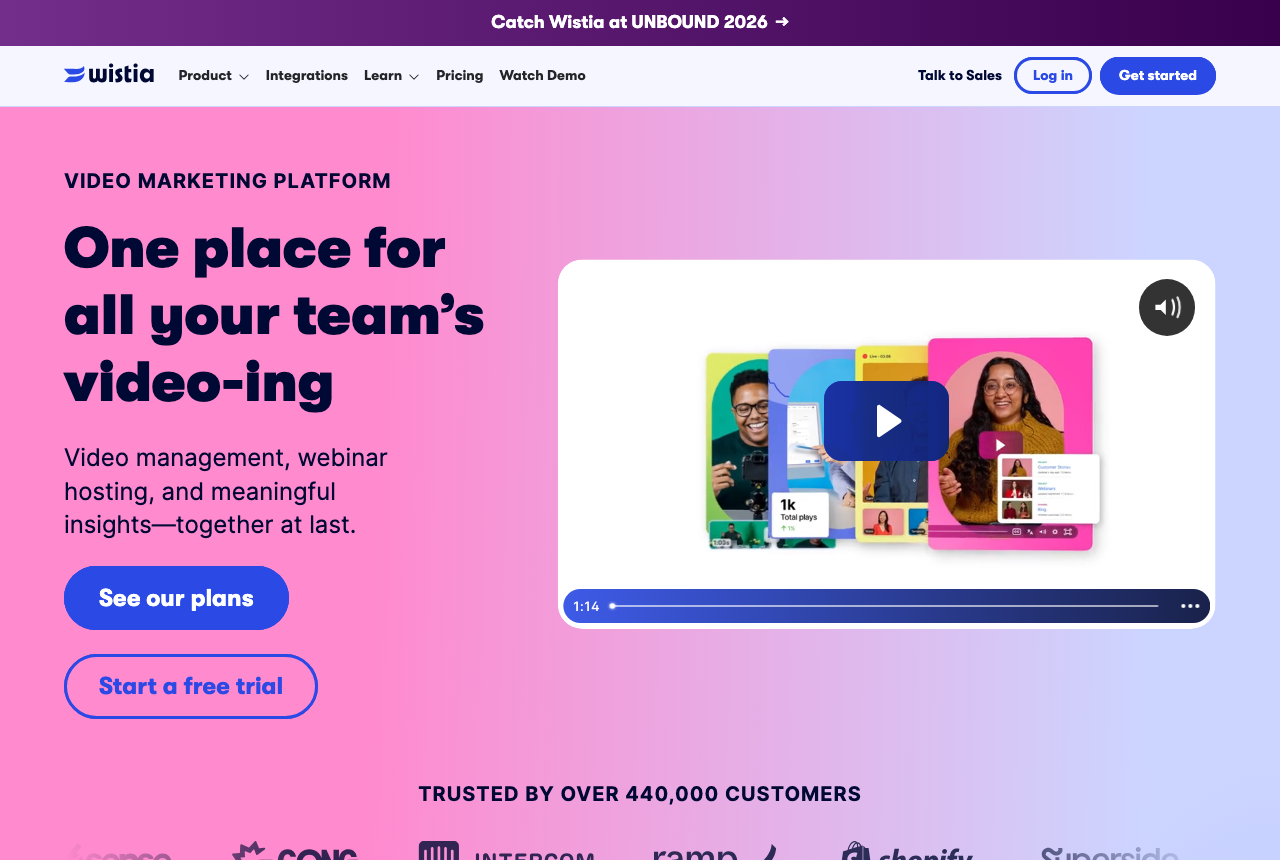
What works
- Branded, ad-free embeds with forms and CTAs
- Heatmaps, A/B testing and engagement analytics
- Real CRM integrations for lead scoring and follow-up
- Free plan to start
What to watch
- Aimed at B2B content marketing and lead generation, with no VSL-specific player controls
- Business plan $79/mo, Lead Gen tier jumps to $329/mo
- No sales-scored split testing or cart-level attribution
Brightcove: what works, what to watch
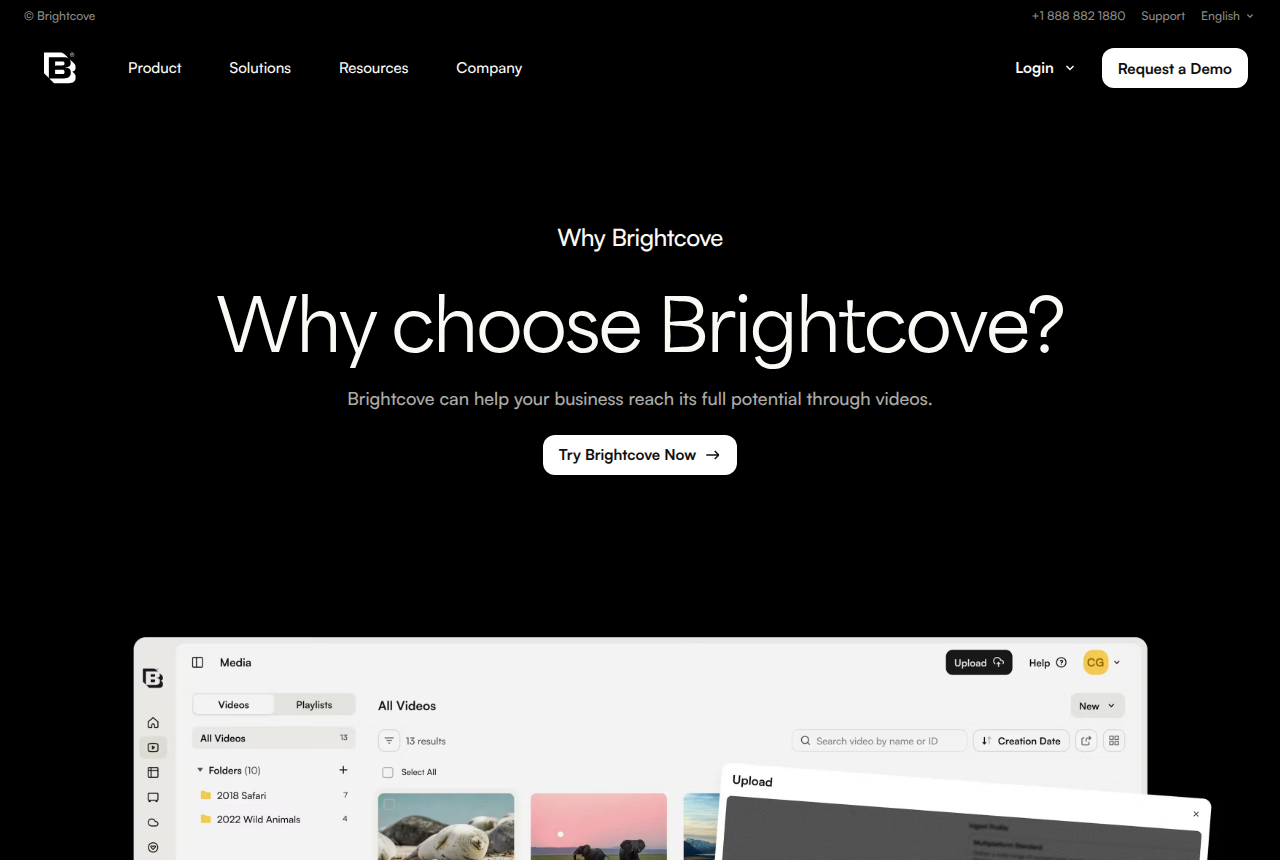
What works
- Enterprise video cloud spanning hosting, streaming, a managed library, analytics, live video, Gallery portals, OTT apps, a player and developer APIs
- OTT delivery across iOS, Android, Apple TV, Android TV, Roku, Amazon Fire TV and tablets
- Gallery adds branded portals, lead forms, calls to action, SEO, Salesforce and HubSpot integrations without requiring a custom build
- Published Studio package matrices separate Marketing, Communications and Media buyers
- Brightcove cites 124 million average streaming sessions a day, 5.9 billion average player requests a month and two Technology and Engineering Emmy Awards
What to watch
- Brightcove publishes no prices. The buying path runs through Contact Sales or Request Demo
- A critical G2 review complains about poor interfaces, weak reporting and admin tools that restrict what teams can do
- An older ad-ops commenter says the team paid for unused features at roughly three times the replacement cost
- The platform covers far more than a self-serve marketing library or a developer-only delivery API, so a small team can pay for modules it never touches
- The vendor pages reviewed do not describe a split test decided on a cart-verified sale or a purchase postback for paid-traffic VSLs
Pricing, tier by tier
Wistia lists its tiers publicly. Free is 25 GB of storage, 200 GB of bandwidth and one user, and the player carries Wistia branding. Business is $79 a month billed annually, with 250 GB or more of storage, 1 TB of bandwidth, calls to action, forms, heatmaps and A/B testing.
Business + Signals is $329 a month billed annually. That tier adds the marketing-automation integrations and the pipeline and revenue attribution. A form on the embed is already included on Business. The higher tier connects video views to the sales pipeline.
Brightcove does not publish plan prices. Its Gallery page and its contact path both ask for a conversation with sales. You get a number only after someone at Brightcove sends a proposal.
Wistia looks cheaper on a slide because the figure is public. Brightcove can still be the right contract when the library has to carry broadcast-scale traffic and also run as television apps. Set that proposal beside the Wistia tier that matches the marketing work.
Brightcove vs Wistia for embeds and the CRM
Business is where Wistia turns on heatmaps and A/B testing.
A test compares two embeds. The help article tells the account owner to declare the winner from engagement, play rate and clicks on the in-player button. A heatmap shows the moments viewers stop watching, and that is the evidence behind the choice.
The automation tier, priced in the section above, is where HubSpot, Marketo and Pardot connect. That is the marketing-automation depth Wistia sells under its own plan names.
Brightcove puts the overlapping marketing work in Gallery. That product includes lead forms, buttons, SEO and social sharing, and it names Salesforce and HubSpot. The page lists those two platforms and stops, so this comparison stays with the names each vendor writes down. Both products can put a form and a button on top of the video. The fork is how you buy, and which platforms are listed.
Brightcove or Wistia when the video has to reach a television
Brightcove's OTT page names iOS, Android, Apple TV, Android TV, Roku, Amazon Fire TV and tablets.
The Why page adds monetization models: AVOD, SVOD, TVOD and hybrid, plus FAST channel creation and advanced quality-of-experience analytics. Scale sits on that same page: 124 million average streaming sessions served a day, and 5.9 billion average player requests a month. A product-marketing site is a different workload. The figures matter when your own traffic starts to look like a network.
The Wistia product and pricing pages describe a marketing platform for the website. Choose Brightcove when the channel has to run on Roku, Fire TV or the other platforms in that device list.
A team that will never charge viewers and never run ads in the stream would be paying for monetization features it leaves unused. A team that will charge viewers, or that needs the video on a connected TV, is looking at something Wistia's plans do not offer.
What operators report after they live with each tool
G2's Brightcove versus Wistia page rates Wistia higher on ease of use, 9.4 against 7.6. A reviewer there describes embedding Wistia as simple. A featured Brightcove review describes poor interfaces, weak reporting and an admin side that limits what the team can do.
An ad-ops discussion says the team left because Brightcove included features they did not need, at about three times the cost of what replaced it. Read that as one renewal story about unused modules. It is a single team's bill, and Brightcove prints no rate to set beside it.
G2 is talking about the admin screen a team uses every week. The ad-ops post is about paying for modules the team never opened. Both belong in the proposal review when Brightcove is still the answer for television apps.
Comments
No comments yet. Questions and your own experience are welcome.
Thank you. Your comment will appear once it has been reviewed.
The verdict
If a marketing lead needs website video they can buy this week, start with Wistia.
The paid marketing plan turns on the form, the heatmap and the engagement test, and you begin from the plan page. Move up a tier when a view has to show up in the sales pipeline. The increase is steep, and the figure is printed before any call.
Choose Brightcove when a broadcast or IT team owns the stack and the video has to run as the TV apps described above, using the monetization models on the Why page. Read the proposal line by line. The admin complaint on G2 and the unused-module story from ad ops are the two items to set against it.
Our pick
Wistia
Wistia is the pick when the video stays on the website and the plan has to be public. Brightcove is the pick when that video has to ship as OTT apps and the buyer will take a proposal from sales.
Frequently asked questions
Is Brightcove more expensive than Wistia?
Can Brightcove replace Wistia for marketing video?
Does Wistia build Roku apps?
Which is easier to administer?
Sources
Other sources
9 discussions and reviews read for this page. Quotes are excerpts; open a link to read the original in context.