. TrackPlay, best Mux alternative for proving which paid traffic bought
From $29/mo. Free plan: Yes (1,000 plays).
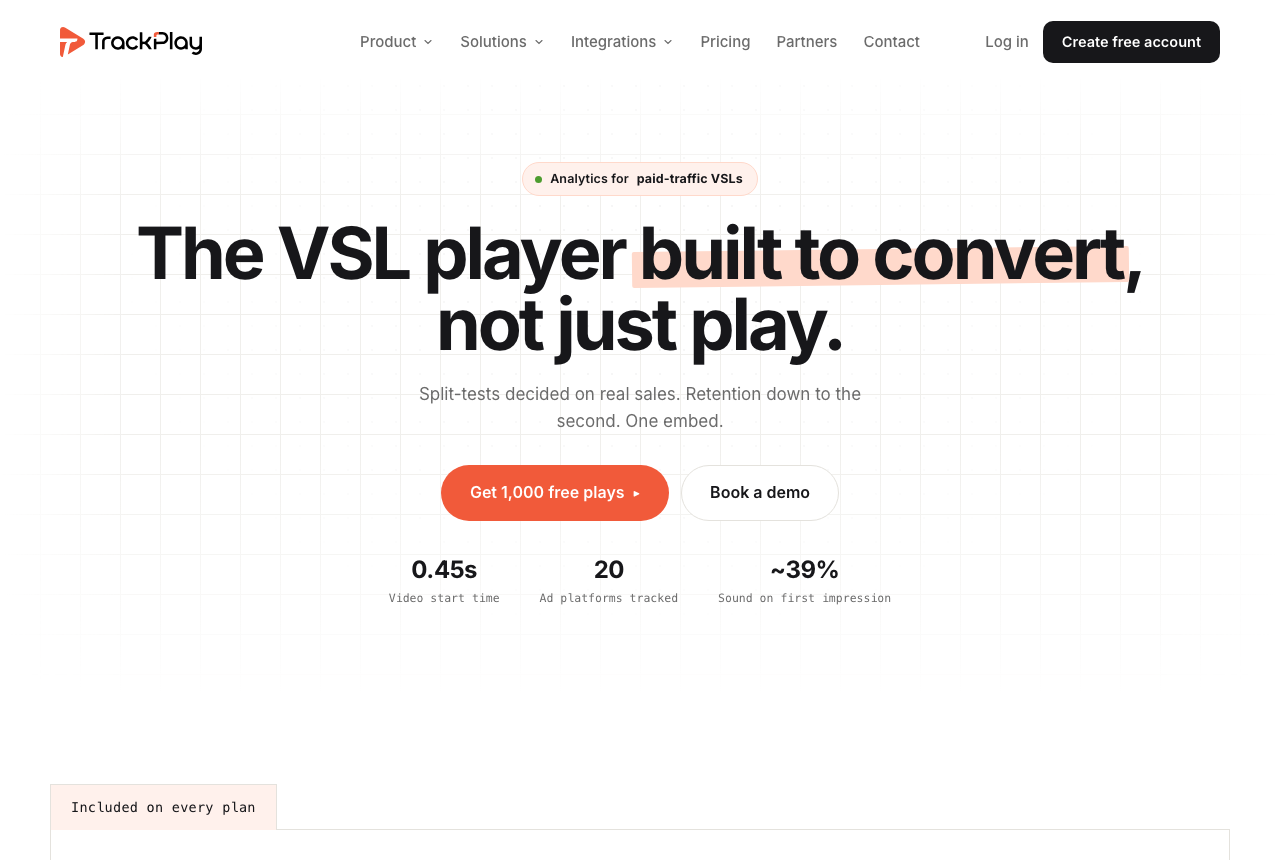
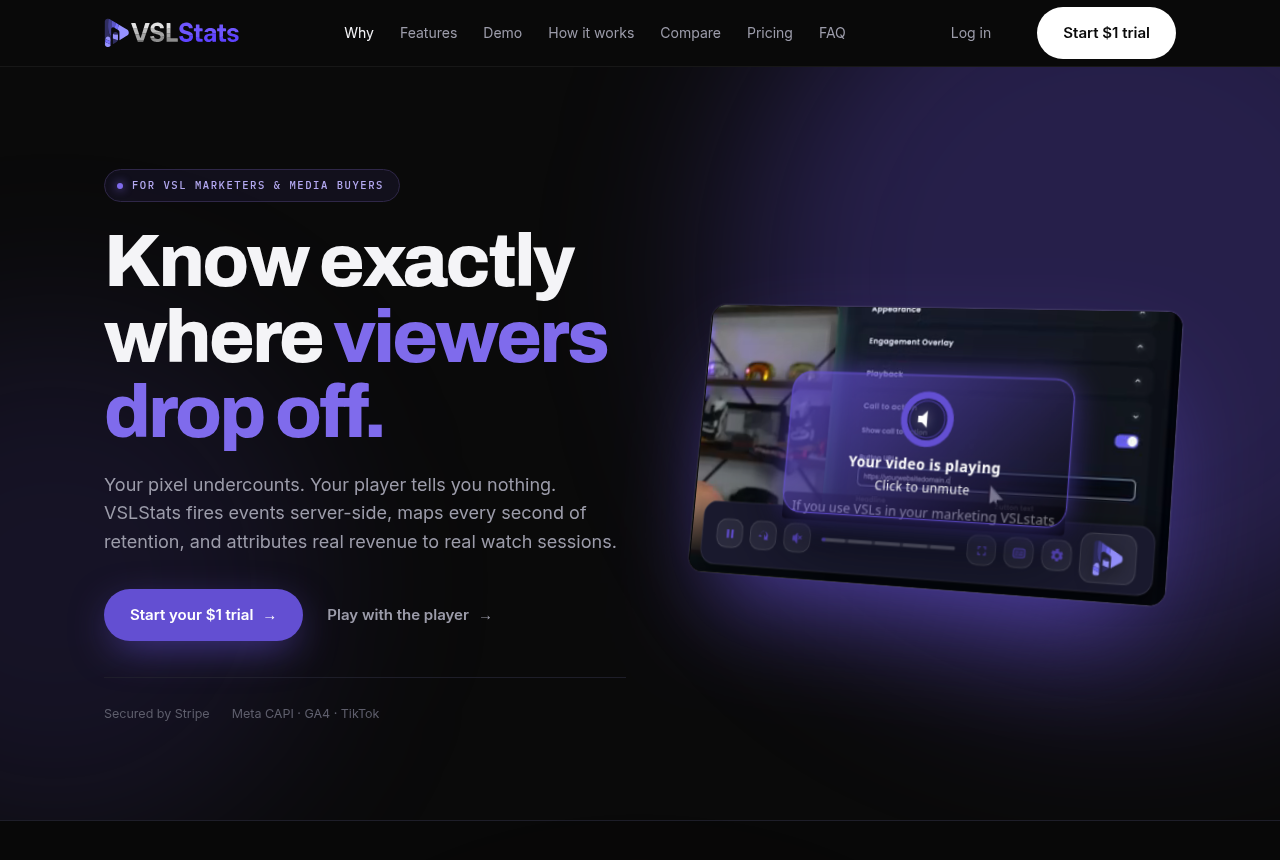
If the video you are moving off Mux is a paid-traffic sales letter rather than a feature inside your product, TrackPlay is built for the one thing Mux never tried to do: prove which traffic bought. It is a VSL player and analytics platform for paid-traffic funnels, and it drops in behind one embed with no code to write. On the front end it holds attention with sound-first autoplay, timed CTAs and watch gates; on the back end it draws per-second retention split into buyers and non-buyers, with hook rate, hold rate and revenue per play. What sets it apart is attribution: the cart posts the verified sale back onto the play that earned it, and TrackPlay fires that conversion server-side to Meta, TikTok and GA4, so the ad platform learns from the actual sale rather than a page-load pixel. Its split tests are decided on that cart-verified sale with real statistics, a z-test with a p-value and a confidence interval, and every variant runs under one embed so your ad links and the campaign's learning never reset. It bills by plays rather than by the minute, every feature ships on every paid plan, and there is a no-card free plan of 1,000 plays a month plus a 14-day trial, with paid plans from $29 a month.
Be clear about the trade before you switch. TrackPlay is narrow by design: built for paid-traffic VSL conversion, it is not a general video host or a B2B content library, so it has none of the channels, SEO pages or webinar tooling of a Wistia, and it is the wrong fit when the video's job is content marketing rather than a direct-response sale. Against Mux specifically, this matters even more: TrackPlay is not a developer video API you build a product on, it has no encoding, storage and delivery infrastructure at Mux's scale, and it does not stream live at all. So if you are leaving Mux because you want the same developer pipe more cheaply, this is not the replacement, and the usage-priced infrastructure further down the list is. It is also very new, with thin outside proof: the testimonials are on its own site and there is little third-party review or Reddit footprint yet, so pilot it on one funnel and reconcile the numbers against your own cart before you trust it with a launch.
Visit TrackPlay for the current plans and the free tier.
What works
- Split tests are decided on the cart-verified sale, with a real z-test, p-value and confidence interval, and every variant runs under one embed so ad links and the campaign's learning never reset
- Server-side conversion tracking to Meta, TikTok and GA4 fires on the watch-time milestone you choose and dedupes browser and server events, so the ad platform optimizes on the actual sale rather than a page-load pixel
- Cart postbacks tie each sale to the play that earned it from seven direct-response carts, including ClickBank, ClickFunnels and Digistore24, server to server
- Per-second retention split into buyers and non-buyers, with hook rate, hold rate and revenue per play, so you can see the exact seconds to cut or protect
- Every feature ships on every paid plan and billing is by plays rather than by the minute or seats, with a no-card free plan of 1,000 plays a month and a 14-day trial; paid plans start at $29 a month
What to watch
- It is narrow by design: built for paid-traffic VSL conversion, it is not a general video host or a B2B content library, so it has none of the channels, SEO pages or webinar tooling of a Wistia and is a poor fit if the video's job is content marketing rather than a direct-response sale
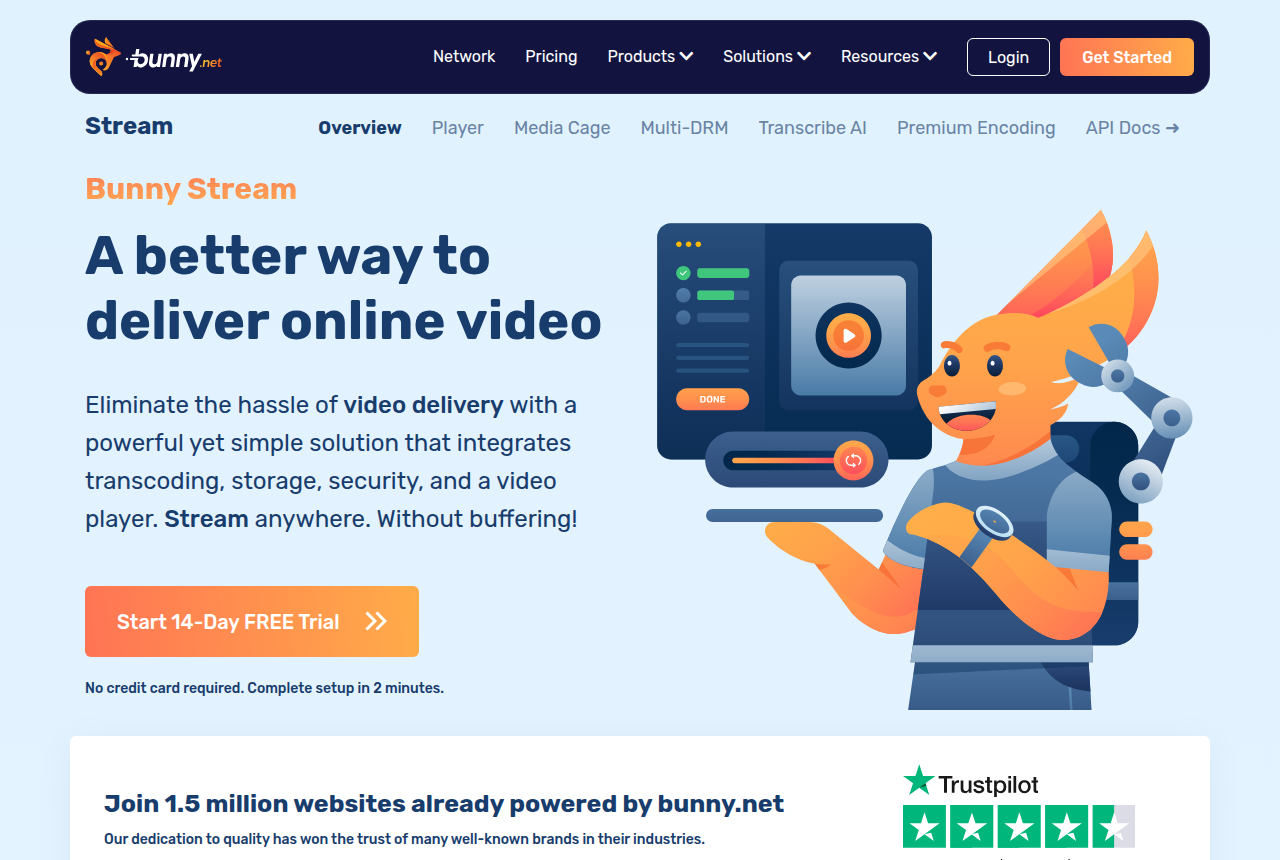
- It is not a developer video API or an infrastructure pipe, and it does not stream live, so it is not a replacement for Mux's core job of building video into your own product; a reader leaving Mux for cheaper developer infrastructure needs a usage-priced pipe such as Cloudflare Stream or Bunny Stream instead
- It is very new, with thin outside proof: the testimonials are on its own site, and there is little third-party review or Reddit footprint yet, so you cannot lean on independent validation before you commit paid traffic. That is what you would expect of a platform this recent